“We just want our baby to be healthy.”
It’s a phrase genetic counselors hear often—simple, heartfelt, and deeply human. Behind those words lie dreams of a smooth journey through conception, pregnancy, birth, and childhood. But as many families discover, the path to parenthood can be unpredictable. Health is never guaranteed, and sometimes the unexpected becomes part of the story.
While genetic counselors can’t promise a healthy baby, they can offer screening options to help families understand and prepare for potential genetic risks. Two of these tools are carrier screening and newborn screening, each offering unique insights at different stages.
Carrier screening identifies whether an intended parent carries a genetic change in specific genes most commonly inherited in a recessive pattern. In recessive inheritance, each parent needs to pass on one change in the same gene to have a child with that condition. Two carriers would have a one in four chance to have an affected child. People often don’t know they are carriers for a recessive condition because it does not show up in their family history and they typically do not show signs of these conditions.
Carrier screening is ideally done before pregnancy, but more commonly occurs during the first trimester (at around 8-12 weeks), often alongside screening for chromosomal conditions like Down syndrome for the baby.
Why early? Because timing matters. When carrier screening is completed before pregnancy, families have more time to process results, explore options for pregnancy and delivery management, and partner with their medical team to create a personalized plan. It’s about using knowledge about inherited risks and making informed choices that best fit your family.
Even when both parents are carriers for the same condition, it doesn’t mean their child will be affected. Additional diagnostic testing is required to know if a child has a condition. However, knowing that risk opens the door to early discussion on potential diagnoses, interventions, specialized care, and—most importantly—preparedness.
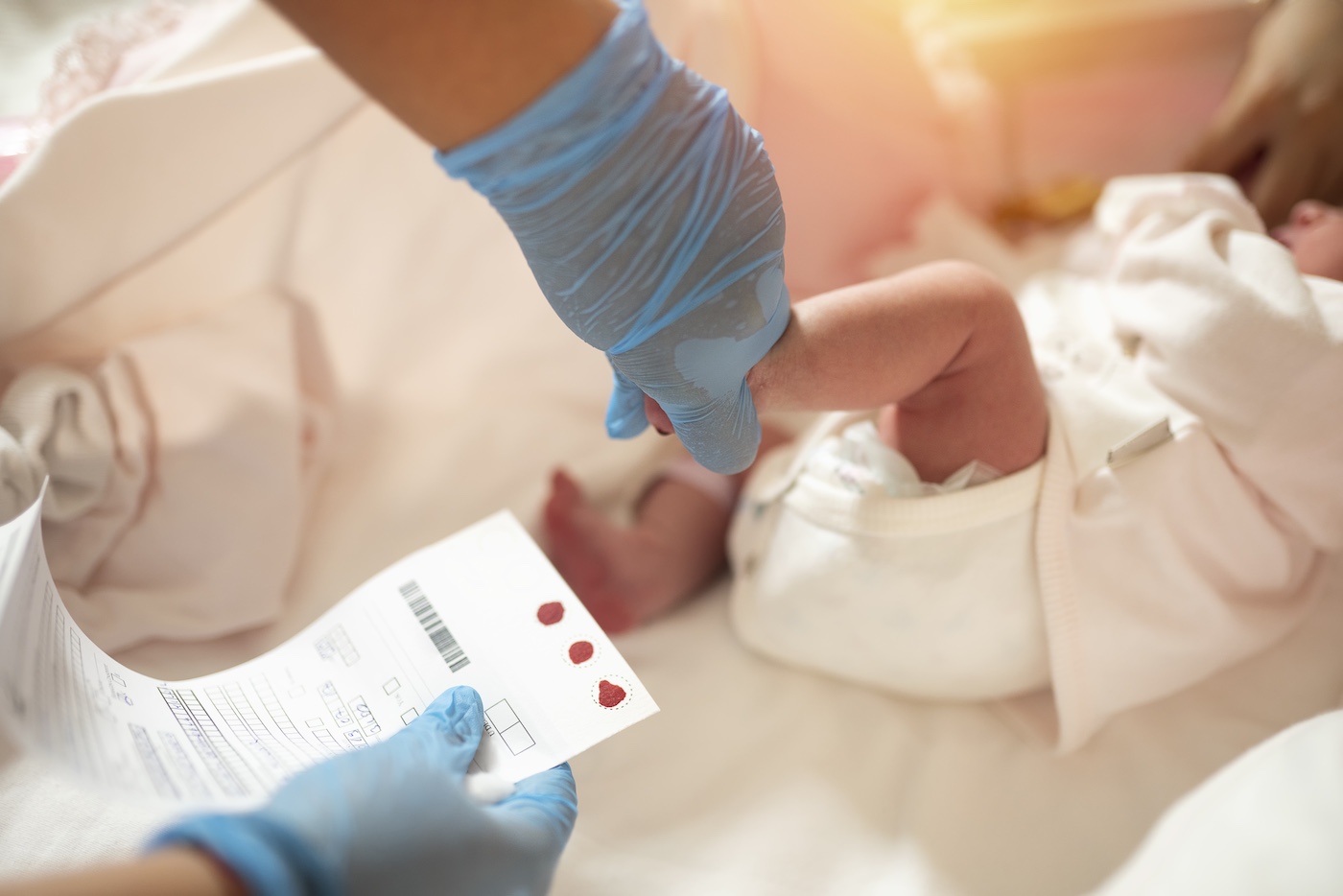
Newborn screening is performed shortly after birth, using a small sample of the baby’s blood. Each U.S. state has its own panel of conditions it screens for, but the goal is universal: early diagnosis and early intervention. Results typically arrive within the first week of life. For most families, these results bring peace of mind. For a smaller group of people, the results mark the beginning of a new journey—one that may involve additional diagnostic testing, specialists, treatments, and support systems. Catching these conditions early can dramatically improve outcomes and quality of life.
Though carrier screening and newborn screening may sound similar, they are different. Carrier screening focuses on the potential risks of parents’ shared genetics, while newborn screening looks at the baby’s actual inherited conditions. The list of conditions screened on newborn screening is also typically different than the carrier screening panels available. Additionally, technology used in newborn screening can differ from that in carrier screening. Therefore, each screen has its own benefits to the patient:
- Carrier screening helps anticipate risk for specific conditions before or during pregnancy.
- Newborn screening identifies specific conditions after birth, often before symptoms appear.
Together, they act as partners empowering families with knowledge and offering a proactive approach to health. Genetic conditions don’t always follow a family history. They can appear unexpectedly, and without early detection, families can miss opportunities for intervention. That’s why these screenings matter—not just for peace of mind, but for the potential to change the health journey for the child.
The Pantier family knows this journey all too well. Ashley Pantier tells the story of why she declined carrier screening in her first pregnancy, not knowing the important role it could have played in the early diagnosis and treatment of her son’s spinal muscular atrophy (SMA) which was not included in her state’s newborn screening panel. Watch how the Pantier family discovered carrier screening and how that information impacted their family.
When families say, “We just want our baby to be healthy,” genetic counselors listen with empathy—and respond with tools and support. Sometimes health can’t be promised, but hope and preparation can be offered.
If you’re considering carrier screening or want to learn more about your state’s newborn screening panel, reach out to your healthcare provider or take a deeper dive into this website for more information. The journey may be unpredictable—but knowledge is a powerful partner.
Medical Science Liaison at Myriad Genetics
Andrea is a certified genetic counselor with an M.S. in Genetic Counseling from Case Western Reserve University. She practiced as a prenatal and preconception genetic counselor with Maternal Fetal Medicine through Premier Health Partners in Dayton, Ohio, specializing in counseling patients through high-risk pregnancies with a focus on genetic abnormalities, ultrasound anomalies, and drug exposure in pregnancy. After four years of clinical practice, she transitioned into an industry-based role with Myriad Genetics in 2019 focusing on prenatal screening and hereditary cancer risk assessment.

Learn about the screening process and how to talk to your doctor.
How to get screened