
As I write this, I am 27. It’s been 20 years since I first learned I am a carrier of a rare, genetic, X-linked condition called adrenoleukodystrophy, or ALD for short. Every day since, this knowledge has empowered me and made me stronger.
I am especially grateful to know I am a carrier of ALD before having children, so that I can prepare mentally, physically, and financially. I believe that all people should have the opportunity to know if they are at high risk for passing down a serious genetic condition to their future children.
Unfortunately, so many people do not know they are carriers for one of these conditions. In the case of ALD, for example, a woman may not know she is a carrier because she has never had a male family member who was diagnosed with ALD — it could have been passed from mother to daughter, without the women in the family ever discovering they have a genetic mutation for this disease.
This is why prenatal expanded genetic carrier screening is so essential, and why I encourage every individual or couple who plans to have a family to ask their medical provider about screening.
But let’s start at the beginning of my story.
Early Warning: How I Learned I Am a Adrenoleukodystrophy Carrier
When I was three years old, my dad, Jack, was diagnosed with ALD, a neurological condition that destroys the white matter in the brain. While it usually affects boys between the ages of five through 10, it can also affect males later in life and is often fatal. Over the following two years, my dad rapidly deteriorated and fell into a vegetative state, passing away when I was in kindergarten.
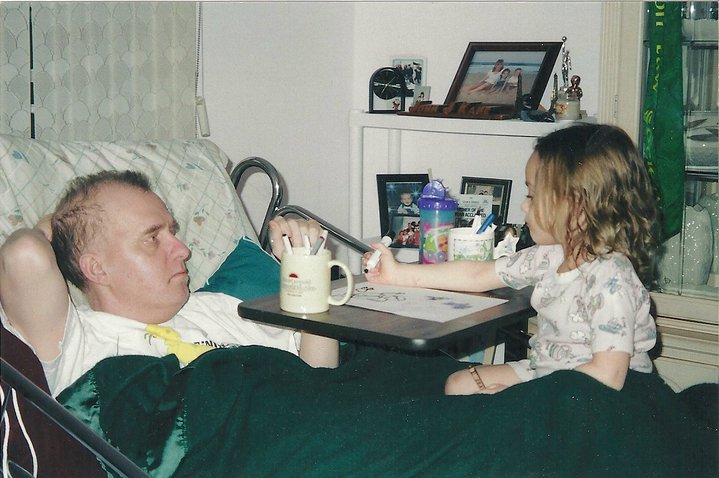
Soon after his diagnosis, my parents learned that because ALD has an X-linked inheritance pattern, any female children of theirs would automatically inherit the genetic variant from my dad and would be considered carriers of ALD.
I don’t recall when my mom first sat me down and told me I was a carrier of ALD. (She says it was when I was around seven or eight years old.) I just know that for as long as I can remember, it has been part of me, something that is as normalized for me as the fact that I have blonde hair and green eyes.
As I got older, my mom continued to share information with me about ALD and X-linked inheritance. When I was a teenager, she took me to see an ALD specialist and genetic counselor who talked to me about my risk of experiencing symptoms when I got older and the options for me to have children without ALD, if that was what I wanted.
Growing up, I don’t remember ever feeling scared about my future as a carrier of ALD. I spent my teenage years and 20s gathering information about what it means to be a carrier of ALD, gaining a deep understanding of my family planning options (and determining that I will pursue IVF with PGT one day), and connecting with the ALD community.
A Woman with a Plan
I want everyone to know just how valuable and essential the knowledge that I am a carrier of ALD has been for me, and how learning this at a young age allowed me to better prepare for my future, especially when it comes to family planning.
Fortunately, carriers rarely develop the same severe symptoms as boys and men with ALD. At the time of my dad’s diagnosis, women were believed to be almost entirely asymptomatic (though more recent research has shown that almost all ALD carriers do eventually experience symptoms to some extent).
However, being a carrier means that without reproductive intervention, there is a 50% chance I will pass ALD on to my future children: if I have a girl, there is a 50% chance she would be a carrier, like me, and if I have a boy, there is a 50% chance he will have the condition.
Most other carriers I meet at ALD conferences only find out they are carriers of ALD when it’s too late—when they already have a son who has been diagnosed with this often-fatal condition.
But there are steps those who are at risk of passing down a serious or disabling genetic condition can take to have biological children without the condition if they chose. There are other ways to build a family such as through adoption.
Those who choose to conceive naturally, without any medical intervention, can prepare for the fact that their child may inherit their genetic mutation and get armed with knowledge about how best to care for their child.
Knowledge is Power
When I was a teenager, someone said to me that carriers of ALD are better off not knowing they are carriers because it is “too emotionally devastating.” This comment has stayed with me throughout my entire young adult life because of just how deeply misinformed I later realized the person was.
Take it from me: when it comes to your genetics, knowledge is power, and expanded carrier screening offers an incredible opportunity to educate yourself and prepare for your future.

Learn about the screening process and how to talk to your doctor.
How to get screened