When a person or a couple decides to pursue in vitro fertilization (IVF) to build a family, part of the process can include preimplantation genetic testing (PGT) to screen the embryos for issues like chromosomal changes.
Once an embryo is implanted and begins to grow, doctors will recommend additional testing on their now-pregnant patient like an amniocentesis or a prenatal cell-free DNA (cfDNA) screen. Why screen for the same genetic changes twice?
Most families choose to screen twice for peace of mind about their baby. But sometimes, the post-implantation/prenatal cfDNA screen uncovers something life‑changing.
That’s what happened to Malory.
Malory’s Story
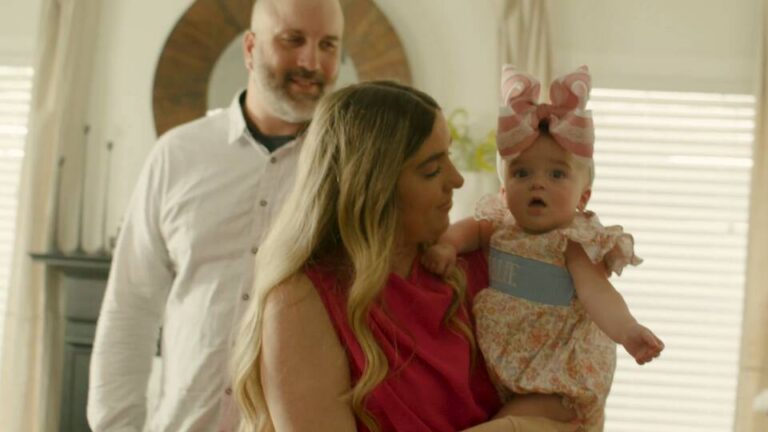
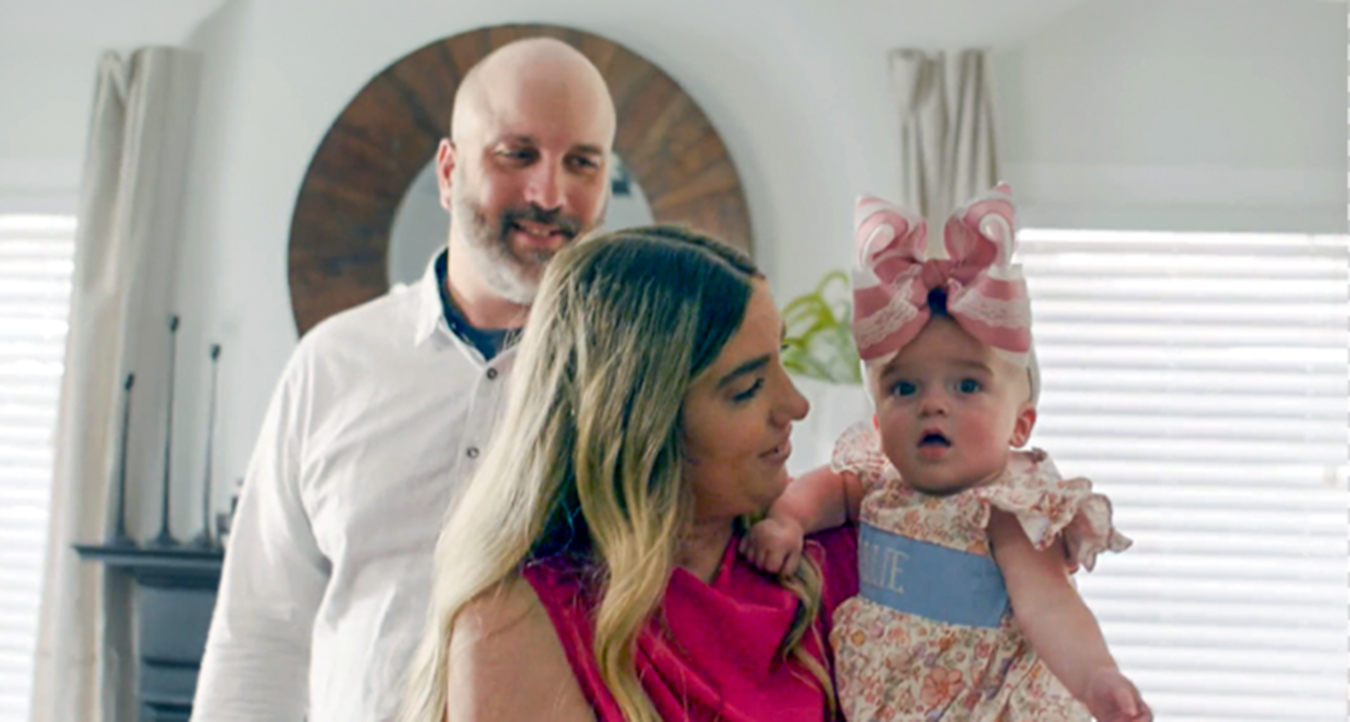
After five years of infertility and two miscarriages, Malory and her husband David finally turned to IVF. The process wasn’t easy–but against the odds, they were thrilled to have six embryos created, one of which was transferred, implanted successfully, and began to grow. At last she was pregnant and the pregnancy seemed to be going well.
Though the embryo had been screened before implantation, Malory’s OBGYN recommended a prenatal cfDNA screen. Her results came back “inconclusive.” Twice.
For the third try at the screening, Dr. Christian Briery, Malory’s maternal-fetal medicine specialist, decided to use Myriad Genetics’ Prequel® Prenatal Screen, because of an advanced technology it uses that no other prenatal cfDNA screens have.
The third results were complex. They flagged multiple genetic abnormalities; findings so concerning that they were unlikely to be seen in a healthy, developing pregnancy. After consulting with a genetic counselor at Myriad Genetics, Dr. Briery called Malory and David in. The couple braced for devastating news about their baby.
Instead, Dr. Briery told them that he didn’t think the problem was with the baby. Instead, he believed that Prequel may have picked up signs of cancer in Malory herself.
Getting answers
At 21-weeks pregnant, Malory went to Bethesda, MD for follow up scans and tests. These results suggested she had stage-four colon cancer that had spread to her liver. Her tumor was large enough that it could rupture at any moment. Specialists there told her that she may be forced to choose between her own life and her baby’s.
Determined to fight for both, she returned home to Louisiana and worked with her doctors to buy time. Her goal: make it to 24 weeks, the earliest point her baby could survive outside the womb. At 27-and-a-half weeks—just before Thanksgiving in 2024—she delivered a two-pound, twelve-ounce baby girl. Against every prediction, her daughter needed minimal support in the NICU and went home months later, healthy and strong.
One screen taken, two lives changed
“Malory’s story is amazing,” said Dr. Briery. “Nobody wants to be told that they have a malignancy. Malory is a miracle and so is her baby.”
Though Malory’s fight with cancer continues, she hopes her story will encourage others to get the Prequel Prenatal Screen and to take action if they get results that may be worrisome for their personal health. “I was told I had three months to live, nine months ago,” she said. “If I die in two months, I still got eight with my daughter. That’s more than I ever thought I’d get. And if I’m able to help one person through a very difficult time in their life with telling my story then it was all worth it at the end of the day for me,” she said.
A note from Myriad Genetics: Maternal malignancy in pregnancy is rare, but when it happens, early insight can make a significant difference. In the case of Malory, her unusual Prequel screen results, followed up by a diligent provider who collaborated with a Myriad genetic counselor, led to further investigation and ultimately Malory’s cancer diagnosis by medical professionals. Please note that the Prequel Prenatal Screen is not designed or clinically validated to assess or detect health conditions in a pregnant person, including malignancy, and therefore, it should not be used or relied upon for such purposes. Like in the case of Malory, the Prequel Prenatal Screen may occasionally produce unusual results that warrant additional clinical evaluation.
Channel Marketing Manager at Myriad Genetics
Malia Boyd started her working life as a magazine journalist with a Master’s in Journalism. More recently, she transitioned into healthcare marketing and works on Myriad Genetics' portfolio of prenatal products.

Learn about the screening process and how to talk to your doctor.
How to get screened